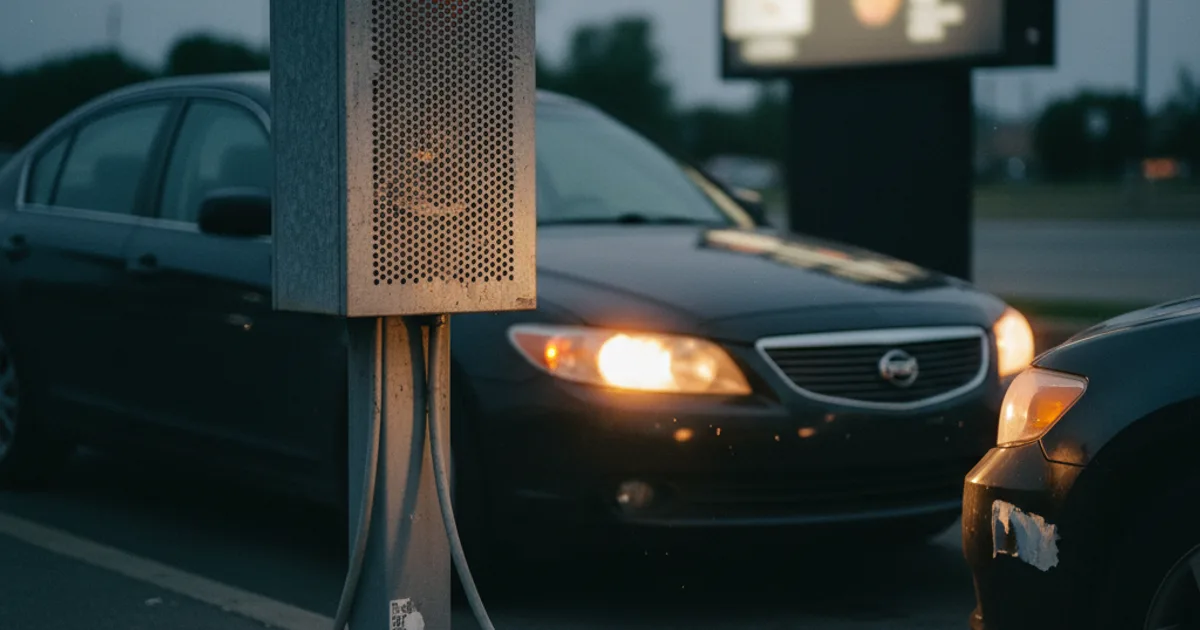
What are real examples of voice AI in enterprise contact centers today? Taco Bell runs voice AI ordering at more than 650 U.S. drive-thru locations as of June 2025, and 78% of the top 50 banks had deployed production voice agents for at least one customer-facing use case by 2025. Production voice AI has moved from pilot to measurable, operated service.
What operational lessons can you learn from Taco Bell's voice AI deployment?
Taco Bell's deployment shows that voice AI scales fastest when tuned to a narrow, constrained task and tested extensively before expansion. The chain grew from four pilot locations in 2023 to more than 650 U.S. stores by June 2025, with the vendor tuning the system specifically for drive-thru acoustics, accents, and slang.
The company tested in a single Irvine restaurant before expanding to four pilot locations in 2023, then scaled past 300 stores and over 2 million processed orders by late 2024, according to Taco Bell's own reporting and the Omilia case study. The case study reported transaction times on par with or better than human order-taking, and early signals pointed to lower employee turnover and sales at least comparable with non-AI locations. Taco Bell's chief digital officer has acknowledged that busy restaurants with long lines are often better served by human order-takers, a caveat worth noting before any operator assumes full automation fits every location. In August 2025, publicized failures, including a customer attempting to order 18,000 cups of water, pushed the chain to reassess deployment conditions. According to Nation's Restaurant News, in a report titled "Taco Bell is adjusting its Voice AI plans," the chain scaled back aggressive expansion after mixed field results. The lesson for any operator: pilot small, measure constantly, and expect edge cases to surface only at scale.
What are the concrete production benchmarks for voice AI in restaurants and contact centers?
Independent 2025 mystery-shopper testing found Taco Bell's voice AI required employee intervention in 30% of interactions, compared with 3% at Bojangles and 33% at Wendy's. Only 57% of shoppers rated the Taco Bell interaction "easy and smooth," versus 67% at Bojangles, showing wide performance gaps even among similar drive-thru deployments.
These numbers come from the same 2025 mystery-shopper round and show that voice AI quality varies sharply by vendor and tuning, not just by category or chain size. Outside food service, industry benchmarks summarized in Brilo's 2026 voice AI trends report put Tier-1 call deflection at 45% to 60%, per-interaction cost reductions at 65% to 90%, and average-handle-time reductions at 35% to 55% for fully automated calls versus 25% to 40% for agent-assisted calls.
| Deployment | Employee Intervention Rate | 'Easy and Smooth' Rating |
|---|---|---|
| Taco Bell | 30% | 57% |
| Bojangles | 3% | 67% |
| Wendy's | 33% | not reported |
These gaps matter for any operator benchmarking a vendor: a lower intervention rate at one chain does not mean the underlying model is better, it often means the workflow is narrower and better integrated with the location's systems.
How should financial-services firms approach production voice AI differently?
Financial-services voice AI must handle authentication, regulated disclosures, and fraud detection, a risk profile restaurant ordering never faces. A commercial industry benchmark reports that 78% of the top 50 banks had deployed production voice agents for at least one customer-facing use case by 2025, up from 34% in 2024.
Unlike a drive-thru order, a banking call might require verifying identity against a core system, reading a regulated disclosure word for word, or flagging a fraud indicator mid-call, so the agent needs direct, audited access to account data rather than a fixed menu. The same commercial benchmark reports that financial institutions can cut payment-reminder collection costs by up to 80% when voice agents handle those interactions. A 2025 Forrester study found 331% to 391% three-year ROI, payback in under six months, and $10.3 million in labor savings for the study organization, numbers tied to a narrow, well-governed use case rather than open-ended conversation. Firms serving customers across languages carry an added layer of complexity; see our guide on how AI agents handle multilingual customer support for how language coverage factors into rollout planning.
What compliance and risk considerations apply to voice AI in regulated industries?
Voice AI in regulated industries must satisfy consent, disclosure, and auditability rules before it reaches production. Outbound calling under the TCPA requires prior express consent and Do Not Call registry suppression, and healthcare deployments must additionally meet HIPAA requirements for any call touching protected health information.
Food-service failures, like the publicized attempt to order 18,000 cups of water that pushed Taco Bell to reassess its rollout in August 2025, show what happens when an agent accepts open-ended input without hard limits. Regulated industries carry higher stakes: a misrouted disclosure or an unauthenticated account change can trigger regulatory exposure, not just a bad review. Operations leaders should confirm specific consent, recording, and disclosure obligations with counsel before launch rather than relying on vendor marketing, since requirements vary by state and by regulator. The strongest production deployments constrain the agent with approved workflows, APIs, and explicit escalation rules rather than allowing unrestricted conversation, the same discipline that let Taco Bell's drive-thru system integrate with location-specific menus, inventory, and promotions.
What infrastructure and system integrations does production voice AI require to complete transactions?
Production voice AI requires direct integration with telephony, CRM, and backend systems of record, not a standalone chatbot bolted onto a phone line. Deployments built on existing telephony and CRM infrastructure commonly reach production in 60 to 90 days, according to industry implementation reports.
Yum Brands' 2025 partnership with Nvidia, using Riva and NIM microservices for conversational AI across drive-thrus and call centers, illustrates the stack layer most operators underestimate: low-latency speech transcription tuned for real-world noise, tied to inventory, menu, and account systems that update in real time. A voice agent that cannot see current inventory or account status will stall the call or guess, and both erode caller trust fast. Agxntsix builds this layer as unified AI Infrastructure so a voice agent can read and write to a CRM mid-call rather than operating on stale data, and the firm is a member of the Claude Partner Network, Anthropic's partner program for companies deploying Claude in production, which shapes how it selects model and tooling choices for clients. Getting this integration layer wrong is the most common reason voice AI pilots stall before reaching scale.
How do you design human fallback and escalation for voice AI systems?
Human fallback in voice AI means routing a call to a live agent the moment the system hits a defined confidence, compliance, or complexity threshold, not after the caller is frustrated. Yum's finance and franchise chief reported only one conversation needed staff intervention during a 90-minute to two-hour observation window, showing how rare escalation becomes once the agent is well tuned.
Escalation design should specify exactly which triggers hand a call to a person: repeated failed authentication, an explicit request for a human, detected distress, or a transaction outside the agent's approved scope. The gap between Yum's reported single intervention in a two-hour window and the 30% intervention rate found in independent 2025 mystery-shopper testing suggests real-world performance depends heavily on tuning, menu complexity, and how aggressively a location's customers try to break the system. Operations leaders should log every escalation with a reason code, review patterns weekly, and treat a rising escalation rate as an early warning rather than a failure to hide. Real-time monitoring dashboards and a supervisor queue, not an occasional spot check, separate a production system from a demo.
What metrics should operations leaders track to evaluate production voice AI performance?
Operations leaders should track containment rate, average handle time, escalation rate, transaction accuracy, and customer sentiment by segment, not a single blended score. Industry benchmarks put Tier-1 call deflection at 45% to 60% and per-interaction cost reductions at 65% to 90%, figures that only hold when measured against a comparable pre-AI baseline.
Metrics should be split by call type and by location or branch, since a single aggregate number hides where a system is underperforming, the same way Taco Bell's chainwide 650-store figure hides a 30% intervention rate found in testing. Average-handle-time reductions run 35% to 55% for fully automated calls versus 25% to 40% for agent-assisted calls, per industry benchmarks, a useful split for separating what the AI alone delivers from what it delivers with a human in the loop. Review these numbers against a pre-AI baseline measured over the same season and call mix, not a generic industry average, before deciding to expand.
How do you scale voice AI deployment based on evidence instead of hype?
Scale voice AI deployment in stages, expanding only after a pilot clears defined thresholds for containment, accuracy, and customer sentiment. Taco Bell expanded from four pilot locations in 2023 to more than 300 stores and over 2 million processed orders by late 2024, then past 650 stores by June 2025, before pausing to fix problems surfaced at scale.
The pattern across every credible production deployment, from Taco Bell's drive-thru to the banks behind the 78% adoption figure, is staged expansion with a kill switch: pilot, measure, fix, then widen scope, and pull back immediately when abuse or failure patterns emerge, as Yum did after public trolling incidents in 2025. Operators considering a first deployment should pick one narrow, high-volume use case, after-hours call answering or speed-to-lead follow-up are common starting points, integrate it with existing telephony and CRM systems, and set explicit go or no-go thresholds before expanding to a second use case or location. Agxntsix positions its own engagements around a 60-day ROI commitment, a brand standard for how fast a well-scoped deployment should show measurable results, not a promise of a specific number for every business. Evidence-based scaling, not enthusiasm, is what turns a pilot into a durable operation.
Sources
- Taco Bell revs up drive-thru AI deployment
- [PDF] AI Meets the Drive-Thru: - Omilia Conversational Intelligence
- Taco Bell Is Replacing Drive-Thru Workers With AI. Why ...
- Yum Brands turns to AI to aggregate social media, third-party reviews
- Taco Bell is adjusting its Voice AI plans - Nation's Restaurant News
- AI will take drive-thru orders at 500 Taco Bell, Pizza Hut ...
- The AI Revolution in Fast Food: Assessing Taco Bell's Voice ...
- Taco Bell Reconsiders AI Drive-Thru Strategy After Mixed Results