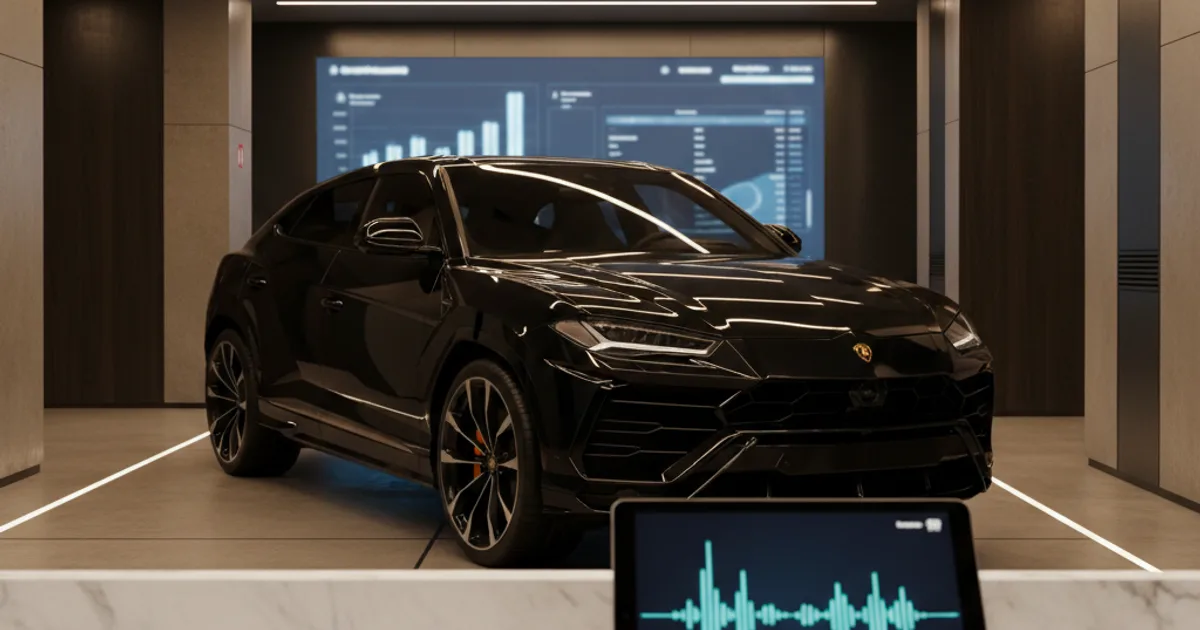
Voice AI for exotic car rentals and high-value logistics means deploying automated phone intake that qualifies callers, checks inventory in real time, and routes high-value prospects to a human agent within seconds. Operators who implement it correctly report 20% to 40% operational efficiency gains and revenue increases of 5% to 20% from reduced missed calls. This playbook walks through each implementation step.
How do you start a Voice AI deployment without disrupting core operations?
Start with a contained after-hours pilot that handles inbound booking inquiries when the desk is closed. This isolates the automation from live deals, removes the risk of touching active client relationships, and gives the team a clean dataset to measure against. Most operators can run a meaningful 30-day pilot before touching daytime workflows.
The after-hours window is the highest-yield starting point because it captures demand that currently goes unanswered. The luxury car rental market, valued at $52.82 billion in 2025 according to Fortune Business Insights, is on a 10.59% CAGR trajectory toward $125.98 billion by 2034. Every missed after-hours call is a compounding loss in a market growing that fast. Agxntsix structures pilot scopes specifically around this window so operators see concrete call-capture data before expanding.
How does Voice AI handle pre-qualification for high-value exotic car rentals?
Voice AI structures spoken intake to collect the four attributes that determine deal viability: vehicle class requested, rental duration, pickup timing, and deposit readiness. A caller who cannot confirm deposit readiness gets routed to a nurture sequence rather than a live agent, protecting that agent's time for qualified buyers.
The qualification logic connects directly to booking engines and CRM systems via API, eliminating manual data entry and enabling real-time inventory checks. Over 60% of luxury car rental reservations are made through digital platforms, per US Luxury Car Rental Market Trends research, so callers who prefer the phone are often the highest-intent buyers, the ones willing to pick up the phone for a six-figure asset. A dental group or a charter operator would recognize the same pattern: phone callers in a digital-first world are usually closer to a decision. The speed-to-lead principles that govern luxury hospitality apply equally here: AI-enabled responders hit the under-15-minute contact window 62.5% of the time, compared to 39.1% for human-only processes, according to Speed-to-Lead Benchmarks 2026 from Apten.
How does the warm transfer to a human agent work?
For high-value inquiries, Voice AI executes a warm transfer: the system maintains the call connection and passes a live summary to the human agent before the caller speaks with them. The agent receives vehicle class, rental window, deposit status, and any flags from the conversation, all before saying hello.
This model keeps the white-glove client experience intact while removing the friction of repeating information. The Bain report "Winning Over the Customer in the Age of AI" describes how 35% of luxury Maisons have already deployed AI-augmented sales advisors to support their associates, and AI-assisted sales recommendations generate three times the ROI of standard bulk marketing promotions. The cheat-sheet handoff is the operational mechanism behind that ROI: the human advisor enters the conversation informed and can focus entirely on relationship and close.
What are the compliance requirements for Voice AI under TCPA robocall regulations?
Because AI-generated voice is classified as a robocall under TCPA guidelines, every deployment requires explicit written consent from each called number, proper recording disclosures, and audited opt-out mechanisms. Outbound campaigns must also suppress numbers listed on the National Do Not Call registry. Noncompliance carries per-call statutory damages that compound quickly at scale.
For exotic car rental operators, the practical implication is that consent must be captured at the point of inquiry, whether through a web form, a previous booking record, or a verbal opt-in that is logged and stored. Inbound calls where the customer initiates contact sit in a different consent posture, but outbound follow-up after that inbound call still requires a documented consent trail. Agxntsix ties DNC suppression and consent capture to every outbound Voice AI deployment it builds. Where stakes are high, operators should confirm their specific consent architecture with qualified legal counsel before launch.
How do you connect Voice AI to fleet status and logistics tracking?
Voice AI for fleet and logistics connects to GPS and IoT sensor data through automated ETL processes, so a caller asking about vehicle location, availability, or delivery timing gets a real-time answer without a dispatcher manually checking a screen. The system reads inventory state and surfaces it as a spoken response.
For B2B logistics operators, scoring algorithms layer on top of that tracking data to prioritize routes and flag exceptions. Autorentalnews describes how AI is making car rental search "smarter and unique" by surfacing inventory attributes dynamically, the same principle applies to spoken intake. A fleet operator running 40 vehicles across three markets cannot staff a dispatcher for every inbound availability question. Voice AI handles the volume; the dispatcher handles the exceptions.
What benchmarks quantify the efficiency improvements of AI sales workflows?
AI sales automation benchmarks show consistent, measurable gains across the lead funnel: follow-up platforms using AI-enabled systems achieve a 35% increase in lead conversion rates, AI follow-up speeds run 50% faster than manual methods, and AI-driven lead scoring systems deliver a 51% higher lead-to-deal conversion rate compared to non-ML models, according to AI Lead Generation Benchmarks 2025 from The Starr Conspiracy.
B2B enterprises report an average 73% increase in qualified leads within six months of introducing AI platforms, and combining behavioral intent signals with AI lead scoring yields a 62% increase in MQL-to-SQL conversions. The hospitality and rental sector specifically reports 20% to 40% operational efficiency gains after Voice AI implementation. The table below maps the key benchmarks to the specific workflow they affect.
| Metric | Benchmark | Source |
|---|---|---|
| Lead conversion rate increase (AI follow-up) | +35% | Marketing Automation Statistics 2026, Digital Applied |
| Follow-up speed vs. manual | 50% faster | Marketing Automation Statistics 2026, Digital Applied |
| Lead-to-deal conversion (AI scoring vs. non-ML) | +51% | GetStellar AI |
| MQL-to-SQL conversion (behavioral + AI scoring) | +62% | The Starr Conspiracy |
| Qualified leads within 6 months (B2B AI platforms) | +73% | The Starr Conspiracy |
| Speed-to-lead under 15 min (AI vs. human-only) | 62.5% vs. 39.1% | Apten, Speed-to-Lead Benchmarks 2026 |
| Operational efficiency gains (rental, hospitality) | 20% to 40% | Lithyem |
| Revenue increase from reduced missed calls | 5% to 20% | Lithyem |
How can luxury rental brands combine automated scheduling with human clienteling?
Luxury rental brands use a hybrid model where Voice AI owns routing, scheduling, and availability checks, while human agents own negotiation, relationship, and finalized bookings. The AI handles volume; the human handles judgment. This preserves the high-touch experience that clients in this segment pay a premium for.
The Luxury Paradox report from Support Services Group frames this well: high-tech tools enable high-touch service rather than replacing it. An AI system that answers at 2 a.m., qualifies the caller, and books a hold on a specific vehicle is not displacing a client advisor; it is delivering a warmer, more prepared lead to that advisor at 9 a.m. the next morning. The Telnyx Consumer Adoption Study found that 54% of respondents prefer booking a hotel stay using an AI voice assistant over a website or app, which signals that customers in premium service categories are already comfortable with this model when it is executed correctly. Internal links to AI infrastructure and CRM pipeline operations explain how the data layer that makes these handoffs clean actually gets built.
How do you measure success after Voice AI goes live?
Measure four numbers in the first 90 days: call capture rate after hours, time from inbound call to first qualified contact attempt, pre-qualification completion rate, and warm transfer acceptance rate by the receiving agent. These four metrics expose where the system is working and where call flows need adjustment.
Set baselines before launch by pulling 60 days of historical call data from the phone system or CRM. A meaningful pilot should show movement on call capture rate within the first two weeks. Revenue attribution takes longer; car rental bookings made 91 days in advance average $555 per week compared to $481 when booked 7 days out, per NerdWallet Rental Car Pricing Statistics, so capturing earlier-stage callers has a direct revenue-per-booking effect that compounds over a full season. Agxntsix's 60-day ROI commitment is built around this exact measurement framework: define the baseline, run the system, and surface what changed.
Sources
- How AI Is Making Car Rental Search Smarter and Unique
- High Touch Sales Automation with AI - Lithyem
- Speed to Lead Automation for Exotic Car Rental and Luxury Hospitality
- AI in Luxury Retail: Elevate Your Client Experience | Endear Blog
- Luxury Car Rental Market Size, Share, Growth | Forecast [2034]
- Winning Over the Customer in the Age of AI: A New Horizon for Luxury
- US Luxury Car Rental Market Trends Demand Analysis 2035
- The Luxury Paradox: High-Tech Tools, High-Touch Service